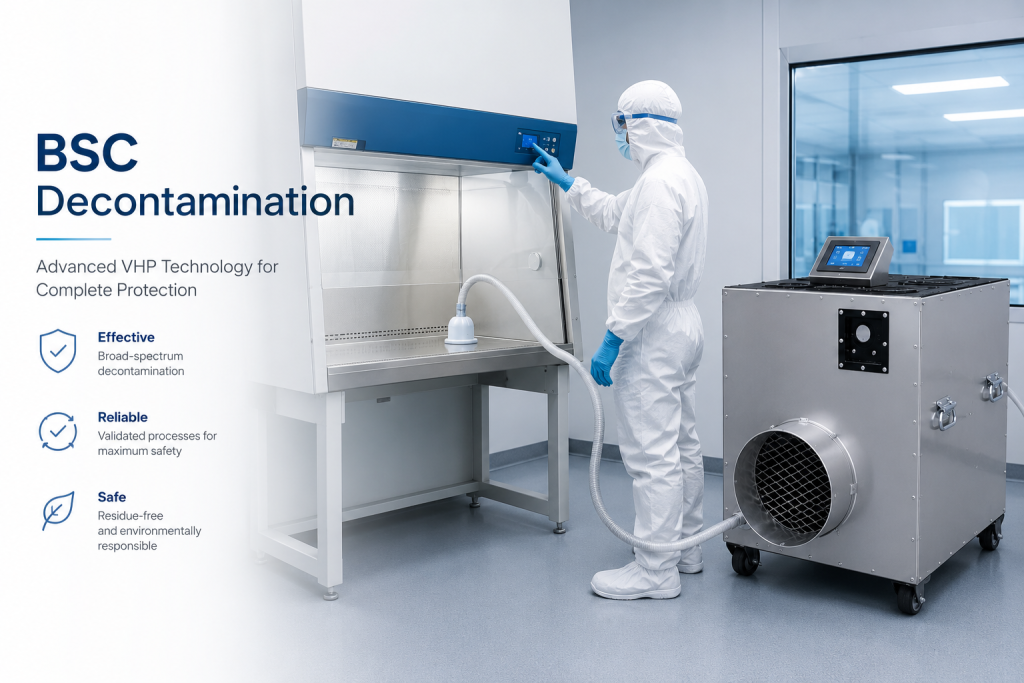
Biosafety cabinet (BSC) decontamination is a critical process performed to eliminate biological contaminants from the cabinet’s internal work area, HEPA filtration system, and airflow pathways. Before maintenance, certification involving filter replacement, relocation, or disposal of a biosafety cabinet, a validated decontamination procedure must be completed to protect personnel, facilities, and the environment from exposure to hazardous biological agents. Proper decontamination ensures that any microorganisms, spores, or biological residues present within the cabinet are rendered inactive before service activities begin.
Our decontamination process utilizes validated formaldehyde gas fumigation technology to achieve comprehensive decontamination of the biosafety cabinet. Prior to treatment, the cabinet is carefully sealed and connected to specialized equipment that generates and circulates formaldehyde gas throughout all critical areas, including the work zone, supply and exhaust plenums, and HEPA filtration sections. Formaldehyde gas is highly effective against a broad spectrum of biological contaminants, including bacteria, viruses, fungi, and bacterial spores, providing deep penetration into areas that may be inaccessible to conventional cleaning and disinfection methods. Following the exposure phase, the cabinet undergoes a controlled neutralization and aeration process to remove residual formaldehyde and ensure safe re-entry for maintenance, certification, or relocation activities.
Each decontamination cycle is performed by trained professionals following established industry guidelines and manufacturer recommendations. Process parameters are monitored and documented to ensure consistent, repeatable results that meet regulatory and safety requirements. Upon completion, the cabinet is safely aerated and verified for service readiness, allowing maintenance, certification, or relocation activities to proceed with confidence. Our commitment to quality, safety, and compliance helps laboratories, healthcare facilities, pharmaceutical manufacturers, and research organizations maintain the highest standards of contamination control and biosafety.